
The Young Wealth Builder
You are still climbing. So why does all the advice sound like you are on the way down?
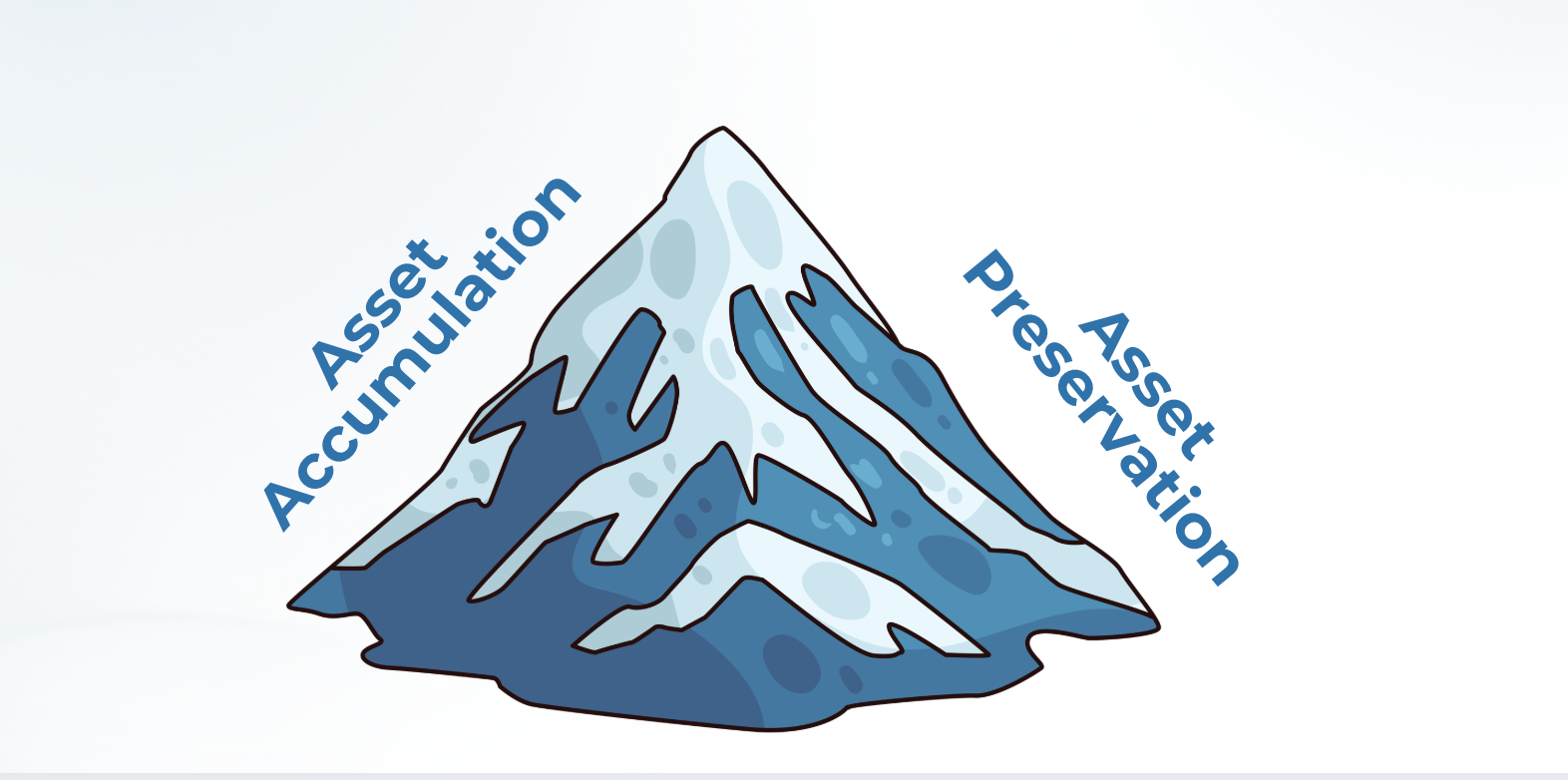
Going up the mountain is asset accumulation. Coming down the mountain is asset preservation. Almost everything you have been told about money was written for people descending a mountain you have not finished climbing.
Most people have four professionals who are not on the same page. You have something harder. You have no page at all.
A coworker with an opinion. A default option you were auto enrolled into and never looked at again. Something that came across your feed last week and sounded right. That is not a plan. That is a collection of accidents.
Building wealth is not complicated. It is just uncoordinated.
The Four I's of Building Wealth
Four forces decide whether you build wealth or just make money.
Answer these honestly. Every one you cannot answer is a leak.
Is your emergency fund earning interest, or is it sitting in a checking account earning you nothing?
Interest is either paying you or costing you. Right now it is doing one of the two.
Do you know what you actually own, or did you pick a box during onboarding and never open it again?
Saving and investing are not the same thing, and only one of them outruns inflation.
Are you building inside accounts that get taxed later, and do you know what that bill looks like when you finally need the money?
Most people build a retirement account and a future tax bill at the same time without realizing it.
If your income stopped tomorrow, how long does the plan survive without you?
Protection is not the opposite of growth. It is what keeps the growth from being erased.
How I Help You
Allocation. Analysis. Accounts.
Three moves, in this order. Skip one and the other two stop working.
Brianna
The Young Wealth Builder
Grow PhaseAges 30 to 45, wants direction and confidence
Allocation.
Decide where every dollar goes before it arrives.
Analysis.
Find out what is actually missing instead of guessing.
Accounts.
Separate the money so the plan runs itself.
01. Allocation
Do you save a percentage, or a number?
Most people save a dollar amount. A hundred here, two hundred there, whatever is left at the end of the month. The problem is that a number never grows. You get a raise and the raise disappears into your lifestyle, because the number stayed the same.
A percentage grows with you automatically. That is the whole difference.
70% Fixed Expenses
Everything it costs to run your life.
10% Guilt Free Spending
Money you are allowed to enjoy without doing math.
10% Emergency Savings
Cash you can reach in a day.
10% Future Investments
Money you do not touch.
It is not about the money you make. It is about the percentage you keep control of.
Four percentages. Now they each need somewhere to live.
02. Analysis
You cannot fix what you have never actually looked at.
An analysis is not a lecture and it is not a sales pitch. It is a full look at what you have, what you owe, what you are protected against, and what happens to all of it in five, ten, and thirty years. Most people have never once seen their whole picture on a single page.
Before
- Money moves and you are not sure where it went
- You own accounts you cannot explain
- You are guessing whether you are behind
- Big decisions get made on a feeling
After
- Every dollar has an assignment
- You can name what you own and why
- You know exactly where the gaps are
- Big decisions get made on a number
03. Accounts
One account cannot do four jobs.
Allocation told you how much. Accounts tell you where. Same four buckets, and each one needs its own container, because if your bills, your fun money, your emergency fund, and your future all sit in the same place, they compete. The future loses every time, because it is the only one with no due date.
Fixed Expenses
A checking account that only handles rent, utilities, insurance, subscriptions, and debt. Money lands here and leaves on schedule. You do not spend out of this one.
Guilt Free Spending
A second checking account for eating out, travel, shopping, and everything you actually enjoy. When it is empty, it is empty. No spreadsheet, no guilt.
Emergency Savings
A high yield savings account, held somewhere separate enough that moving money takes a day. That delay is the feature, not the flaw.
Future Investments
This is the one nobody can answer for you from a blog post or a video. The right account depends on two things: your risk tolerance and your time horizon. Everyone has a different answer, which is exactly why the internet gives you the wrong one.
Find Out Which Account Fits YouYou do not need more information. You need it in order.
Bring what you have, even if it is nothing. In one sitting we map your allocation, run your analysis, and set up your accounts so the climb actually goes somewhere.
Landed on the wrong page? Two minutes will tell you.